
Hilo Gold Rush guide covering hi-lo rules, multiplier steps, tie handling, cashout decisions, odds logic, and how streak-based risk and volatility are managed.
Hilo Gold Rush Rules, Odds Logic, And Risk Control Guide
Hilo Gold Rush is a hi-lo style casino game where outcomes are driven by sequential guesses rather than by paylines or card hands. Each round typically reveals a reference value and asks for a prediction about the next revealed value, such as whether it will be higher or lower. A correct prediction increases the potential payout through a multiplier step, while an incorrect prediction ends the round and settles the stake under the game’s loss conditions. This structure creates a risk ladder where longer streaks can produce larger multipliers but occur less frequently.
This article explains Hilo Gold Rush through its core mechanics, including how the game flow is structured, how multiplier steps are commonly applied, how tie outcomes are treated, and which factors shape volatility in streak-based formats. The goal is to support clear interpretation of settlement and practical exposure control.

Hilo Gold Rush Core Concept And Round Flow
Hilo Gold Rush is built around a sequence of reveal events. A starting value is displayed, and a wager is placed for that sequence. The next value is then generated, and the round is settled based on whether the prediction is correct. If correct, the game typically offers the option to continue to the next step or to cash out at the current multiplier. If incorrect, the stake is lost and the sequence ends.
The flow can be summarized as:
- Stake placement: the starting wager is locked for the sequence.
- Reference reveal: a current value is shown as the comparison point.
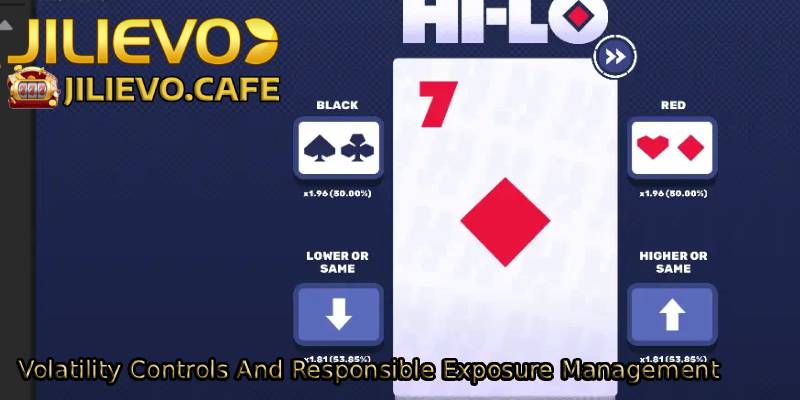
- Prediction: higher, lower, and sometimes an equal option where offered.
- Next reveal: the next value is displayed and evaluated against the prediction.
- Continue or cash out: successful steps increase multiplier and offer exit choice.
This structure is similar to classic hi-lo card games, but Hilo Gold Rush may present values through a themed interface rather than a standard deck presentation. Regardless of theme, the operational concept remains a sequence of independent reveals evaluated against the user’s chosen direction.

Outcome Space And What “Higher” And “Lower” Mean
The meaning of higher or lower depends on the value set used by Hilo Gold Rush. Many hi-lo games use standard card ranks, where Ace can be treated as low, high, or context-dependent depending on the rules. Other hi-lo games use numbered values within a range. The posted rules define the ranking order and whether Ace or other special values have unique treatment.
The critical rule question is tie handling. If the next value is equal to the current value, Hilo Gold Rush must define what happens. Common approaches include:
- Tie as loss: equal outcomes end the sequence as a losing result.
- Tie as push: the step does not advance but stake is not lost on that step.
- Tie option: an “equal” prediction is offered with a higher multiplier due to lower probability.
Because tie handling changes probability and payout behavior, the settlement rule for equal outcomes is one of the most important elements to confirm in Hilo Gold Rush.

Multiplier Steps And Cashout Decisions
Hilo Gold Rush typically uses a step-based multiplier ladder. Each correct prediction increases the multiplier applied to the original stake. The multiplier can be displayed as a growing payout value or as a progressive multiplier chart. A central mechanic is the choice to continue or to cash out after a correct step.
This choice defines the game’s risk profile. Cashing out locks a smaller, more frequent result. Continuing pursues a higher multiplier but increases exposure to an eventual incorrect step that can end the entire sequence. Because the stake is usually committed to the full sequence, a loss at any step can forfeit the accumulated potential unless the rules allow partial settlement.
In many hi-lo designs, the multiplier growth is not linear. Early steps may increase the multiplier modestly, while later steps increase it more sharply to reflect the rapidly decreasing probability of maintaining a long streak. This non-linear growth is intended to keep the later steps meaningful while still reflecting the difficulty of achieving them.

Probability Logic And Why Streaks Increase Variance
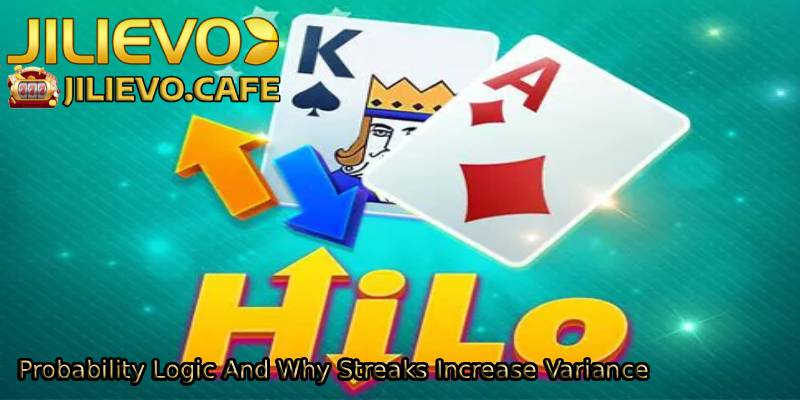
Hilo Gold Rush volatility is driven by streak dynamics. Each additional prediction step reduces the probability of reaching that step because it requires multiple correct outcomes in a row. Even if each step has a moderate chance of success, the combined probability of several successes declines quickly because probabilities multiply across steps.
This is why hi-lo games often feel uneven in short sessions. A sequence can end immediately on the first step, or it can extend through several successful steps and produce a larger cashout. The distribution tends to be long-tailed: most sequences are short, and a smaller number of sequences account for a large portion of total returns.
Practical interpretation is improved by recognizing that “being due” is not a valid assumption. Each reveal is generated independently under standard randomization models. Previous successes or failures do not make the next step more or less likely to be correct. In Hilo Gold Rush, streak outcomes cluster naturally due to variance rather than due to momentum.
Common Play Modes And Optional Risk Settings
Some Hilo Gold Rush implementations include optional settings that change the risk profile. These can include limiting the maximum number of steps, offering different multiplier ladders, or providing a low-risk mode where tie outcomes are treated more favorably but multipliers are reduced. Where such settings exist, the relevant interpretation point is that payout tables are usually adjusted to reflect the altered probability.
Auto play and auto cashout settings may also be available. Auto play repeats sequences at a defined stake, while auto cashout can stop a sequence automatically after a chosen number of successful steps or when a target multiplier is reached. These tools standardize behavior but do not change the underlying probability of each reveal.
When using auto settings, visibility of configured targets is important so that the current risk profile is not misunderstood mid-session.
Settlement Records, History Displays, And Verification
Hilo Gold Rush is easiest to verify when the interface clearly records the sequence: the initial reference value, each prediction made, each revealed outcome, and the step at which the sequence ended or was cashed out. A concise log supports dispute-free interpretation, especially in cases where a tie outcome occurs and tie rules determine whether the sequence should end or continue.
Some interfaces provide recent-history displays of outcomes or multipliers achieved. These histories support reconciliation but should not be treated as predictive indicators. Under standard rules, each new sequence is independent, and prior outcomes do not alter the distribution of future outcomes.
Volatility Controls And Responsible Exposure Management
In Hilo Gold Rush, exposure is controlled primarily by stake sizing and by limiting how far a sequence is allowed to run before cashout. Pursuing longer streaks increases variance, while cashing out earlier reduces variance but also limits potential payout. Because the game can resolve sequences quickly, decision frequency can increase exposure over short time windows.
Practical controls commonly include:
- Stable stake sizing: keeping the stake consistent to avoid compounding swings.
- Defined step limits: choosing a maximum number of steps before cashout.
- Session limits: controlling time and total exposure in fast-resolution formats.
These controls do not change the probability of outcomes, but they do change how variance is experienced at the session level.
CV666 Context For Hilo Gold Rush Presentation
On CV666 , Hilo Gold Rush is typically presented with clear higher-lower labeling, visible multiplier step displays, and consistent settlement records that support structured, reliable, and transparent interpretation of tie handling, cashout confirmation, and final payout calculation.

CEO Erik Howard is the founder and driving force behind JILIEVO, a trusted and reputable online betting platform. With a clear vision of creating a safe, transparent, and entertaining space for players, he has built JILIEVO into a brand known for innovation, integrity, and customer-first values. Under his leadership, JILIEVO continues to set new standards in the world of sports and casino betting, offering players an exciting yet secure environment to enjoy their favorite games.
Contact information : https://2401.cn.com/
Website: https://2401.cn.com/ceo-erik-howard/
Phone: +880 1712-345678
Email: ceoerikhoward@gmail.com
Address: 45, Road 12, Dhanmondi, Dhaka 1209, Bangladesh
#Jilievo #Jilievocafe #Jilievo_cafe #Jilievo_Bangladesh #Jilievo_online_betting #Jilievo_casino #Jilievo_login #Jilievo_register #live_casino_Bangladesh #sports_betting_Bangladesh #online_casino_Bangladesh #slot_games_Bangladesh #ceo_erik_howard