
FlyX crash game rules explained with round phases, rising multipliers, cashout timing and confirmation, auto cashout and dual bets, plus volatility drivers.
FlyX Crash Game Rules And Cashout Timing For Online Play
FlyX is a crash-style casino game built around a single rising multiplier that can end abruptly at an unknown point. Each round begins with a stake, the multiplier increases in real time, and the round stops at a randomly determined endpoint. A payout is credited only when a cashout is confirmed before the endpoint occurs. This structure makes FlyX easy to understand mechanically while still producing meaningful variance because the key decision is choosing how long to stay in a round.
Because FlyX is driven by timing rather than by card choices or symbol alignment, consistent interpretation depends on understanding round phases, cashout confirmation rules, and the difference between low targets with higher hit frequency and higher targets with lower hit frequency. The sections below explain FlyX rules and settlement behavior in a practical, verification-friendly way.

How FlyX Works As A Crash Multiplier Game
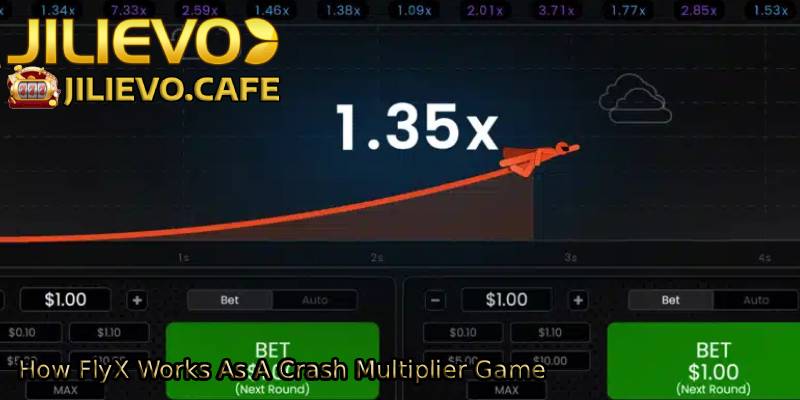
In FlyX, a round is defined by a multiplier that starts at a base value and grows upward until the game ends the run. The endpoint is often described as a crash point. If a cashout is recorded before that crash point, the return is calculated by multiplying the stake by the cashout multiplier. If the crash point occurs first, the stake is lost for that round under standard crash-game settlement conventions.
The game’s defining tradeoff is embedded in the multiplier curve. Lower cashout targets are reached more often but produce smaller returns per successful round. Higher targets are reached less often but can produce larger returns when the round extends far enough. FlyX therefore expresses risk through a simple timing choice, with no need for complex rule memorization beyond the cashout and settlement logic.
Round Flow And What Happens In Each Phase
Most FlyX implementations follow a repeating cycle that is easy to track on the interface. A pre-round phase provides a short window for placing stakes and adjusting settings. When the round begins, the active phase starts and the multiplier rises continuously. The round ends when the crash point is reached, and the game transitions briefly to a resolution phase before starting the next round.
The pre-round phase is the only time a new stake is typically accepted for that upcoming round. Once the active phase begins, the stake is locked, and the only interaction is cashout. This is why interface timing indicators matter. A clear pre-round countdown helps ensure the stake is placed into the intended round, and a clear active-phase display helps ensure cashout attempts are made within the live window.
Because FlyX rounds can end quickly, especially when the crash point is low, the rhythm can feel fast compared with many table games. That speed can increase the number of decision cycles per session, which is why understanding exposure as time-based rather than event-based is important when evaluating FlyX play pacing.

Cashout Rules, Confirmation, And Auto Cashout Settings
Cashout is the central mechanic in FlyX. During the active phase, a cashout control is used to exit the round at the current multiplier. A cashout is successful only when it is confirmed before the crash point. In online systems, confirmation is typically based on server-side timing rather than on local animation timing. This distinction matters because a cashout attempt made near the endpoint can fail if it is not processed before the crash point is registered.
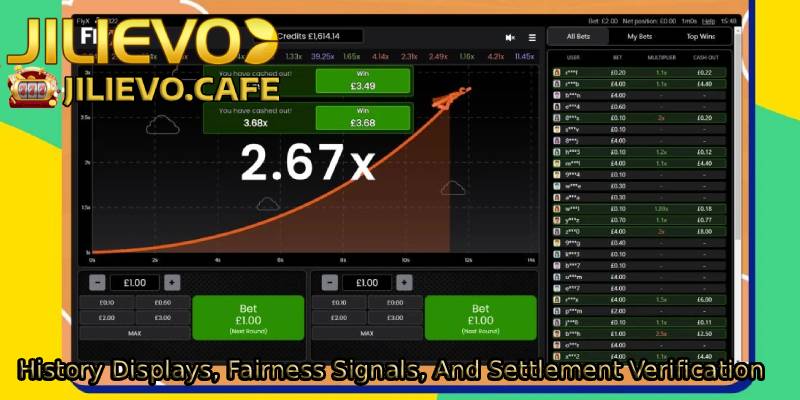
Clear confirmation signals support reliable interpretation. FlyX is easiest to verify when it displays the cashout status as accepted, the multiplier at which the cashout settled, and the final crash point for the round. A transaction record that lists stake and credited return further reduces ambiguity in rapid rounds.
Many versions of FlyX also provide auto cashout. Auto cashout attempts to cash out automatically when a preset multiplier is reached. Auto cashout does not change the probability that the round reaches the chosen level, but it standardizes execution and reduces manual timing errors. This can help maintain consistent exposure patterns, particularly for users who prefer stable target selection over reactive clicking.
When auto cashout is used, the same confirmation principle applies. The auto cashout must be processed before the crash point. A well-implemented FlyX interface typically shows the configured auto target and displays the accepted cashout result when the target is reached.

Dual Bets And Split Target Structures
Some FlyX interfaces allow two independent stakes to be placed for the same round. When this option exists, each stake can have its own cashout target. This creates a split exposure structure where one stake can be assigned a lower target to increase hit frequency, while the second stake can be assigned a higher target to capture occasional long runs.
Dual bet structures do not change how FlyX generates crash points. The round endpoint is the same for both stakes. The only difference is how exposure is allocated across targets. Both stakes can cash out successfully if the round extends beyond both targets and cashouts are confirmed. Both stakes can also lose if the crash point occurs below the lowest target and no cashout is recorded.
Because both stakes are still subject to the same crash point, the split-target approach is best interpreted as a way to express two variance profiles at once. It does not create a protective guarantee. In FlyX, the downside remains present whenever the crash point occurs early.
Volatility Drivers And Practical Exposure Controls
FlyX volatility is primarily defined by the cashout target. Lower targets generally produce more frequent winning rounds, but each win is smaller. Higher targets generally produce fewer wins and wider swings because more rounds end before the target is reached. This relationship is structural and remains consistent regardless of short-run sequences.
Several practical drivers shape how volatility is experienced in FlyX sessions:
- Target selection: higher targets increase variance and reduce hit frequency.
- Round speed: faster rounds increase the number of decisions per session, increasing exposure opportunities.
- Stake sizing: larger stakes increase swing magnitude without changing the crash distribution.
- Decision frequency: frequent re-entry across rounds can compound exposure quickly.

Because FlyX is time-based, exposure can accumulate faster than expected if round participation is continuous. Session control is typically achieved through stable stake sizing, predefined session limits, and consistent target choice rather than target escalation after losses. Raising targets or stakes in response to short-run outcomes increases dispersion and can widen session swings without changing the underlying probabilities.
Short-run clustering is a normal feature of crash games. FlyX can produce sequences of early crash points or occasional extended runs. These sequences should be interpreted as variance rather than as evidence that the next round is more likely to behave in a particular way.
History Displays, Fairness Signals, And Settlement Verification
Many FlyX implementations display a history of recent crash points. This history is most useful for verification: it confirms the recorded endpoint for each round and can help reconcile whether a cashout target would have been reached had it been used. However, the history should not be treated as predictive. Under standard crash-game models, each FlyX round is generated independently, and prior endpoints do not determine future endpoints.
Settlement verification is strongest when the interface provides a clear bet log that includes the stake, the cashout multiplier if successful, the credited return, and the final crash point. When a dispute arises, these records provide a structured basis for confirming whether a cashout was accepted before the crash point and which multiplier was applied to the payout.
Some platforms also provide fairness tooling such as round identifiers and verification methods. Where such tools exist, they support auditing of FlyX outcomes by allowing the recorded crash point to be validated against a published method. Even without specialized verification, clear logs and consistent crash point display remain the practical foundation for transparency.
CV666 Context For FlyX Presentation And Clarity
On CV666 , FlyX is typically presented with structured round countdowns, visible auto cashout controls, and consistent settlement records intended to support reliable interpretation of cashout confirmation timing, crash point display, and credited payout calculation.

CEO Erik Howard is the founder and driving force behind JILIEVO, a trusted and reputable online betting platform. With a clear vision of creating a safe, transparent, and entertaining space for players, he has built JILIEVO into a brand known for innovation, integrity, and customer-first values. Under his leadership, JILIEVO continues to set new standards in the world of sports and casino betting, offering players an exciting yet secure environment to enjoy their favorite games.
Contact information : https://2401.cn.com/
Website: https://2401.cn.com/ceo-erik-howard/
Phone: +880 1712-345678
Email: ceoerikhoward@gmail.com
Address: 45, Road 12, Dhanmondi, Dhaka 1209, Bangladesh
#Jilievo #Jilievocafe #Jilievo_cafe #Jilievo_Bangladesh #Jilievo_online_betting #Jilievo_casino #Jilievo_login #Jilievo_register #live_casino_Bangladesh #sports_betting_Bangladesh #online_casino_Bangladesh #slot_games_Bangladesh #ceo_erik_howard