
Learn how to play baccarat with card values, Player and Banker third-card rules, main bets and payouts, commission, tie handling, and round settlement steps.
How to Play Baccarat Rules, Bets, And Round Settlement
Baccarat is a classic casino card game built around comparing two hands called Player and Banker. The objective is to wager on which hand will finish closest to a total of nine, or to wager that the round will end in a tie. Baccarat is widely used in online and live dealer settings because the rules are standardized, the decisions are limited to bet selection, and the round settles quickly once the dealing and drawing rules are applied.
This guide explains how to play baccarat from the ground up, including card values, how hand totals are calculated, how the third-card rules work, what the main bets pay, and how a baccarat round is typically presented at the table. The focus remains rules-forward and evergreen, supporting accurate play and reliable interpretation of outcomes.
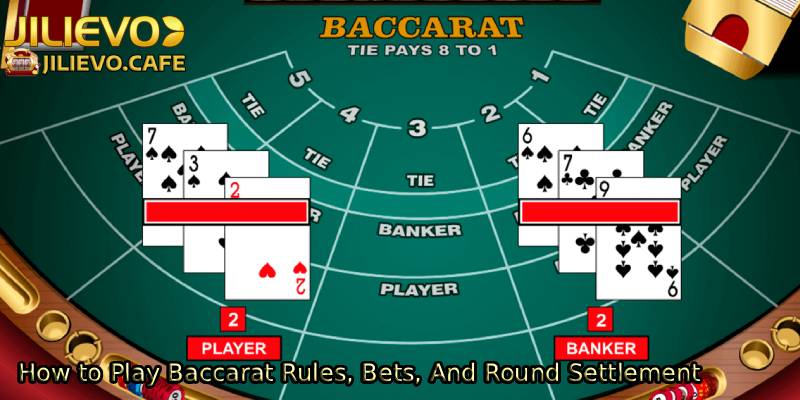
What Baccarat Is And What A Player Actually Does
Baccarat is not played by making strategic hit or stand choices. Instead, the primary action is placing a bet before the cards are dealt. Once bets are placed, the dealer follows fixed drawing rules that determine whether a third card is drawn for Player, Banker, both, or neither. The outcome is then resolved by comparing final hand totals.
Most baccarat rounds offer three main wager options:
- Player: wins if the Player hand total is higher than the Banker total.
- Banker: wins if the Banker hand total is higher than the Player total.
- Tie: wins if both hands finish with the same total.
Some tables also offer side bets, such as specific pairs or margin-of-victory outcomes, but the fundamental baccarat experience is built on Player, Banker, and Tie.
Card Values And How Baccarat Totals Are Calculated
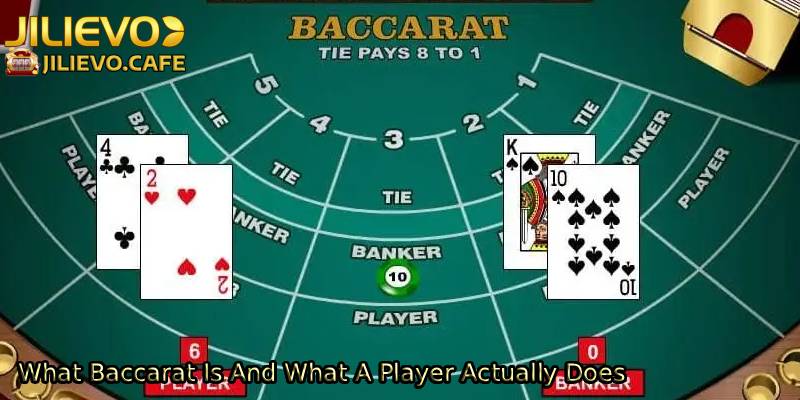
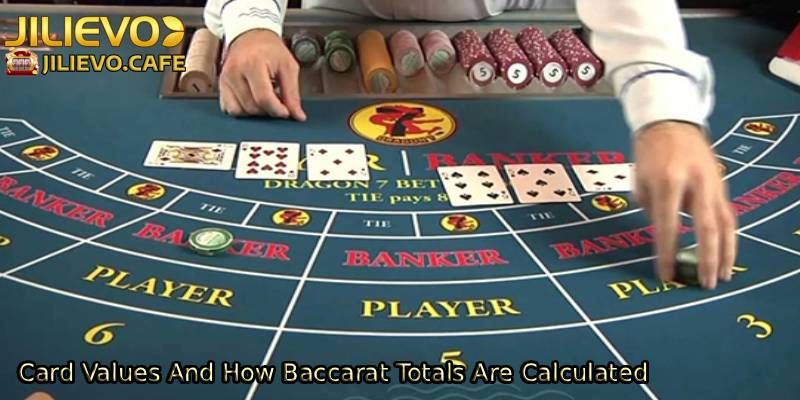
In baccarat, card values differ from many other card games because totals are evaluated modulo 10. The values are:
- Ace: 1 point
- 2 through 9: face value
- 10, Jack, Queen, King: 0 points
To calculate a hand total, the card values are added and then the last digit is used. For example, a hand of 7 and 8 totals 15, which becomes 5 in baccarat. A hand of 9 and 6 totals 15, which also becomes 5. A hand of 10 (0) and 9 totals 9.
Baccarat hand totals always range from 0 to 9. A total of 9 is the best possible outcome, followed by 8, then 7, and so on.
How A Baccarat Round Starts
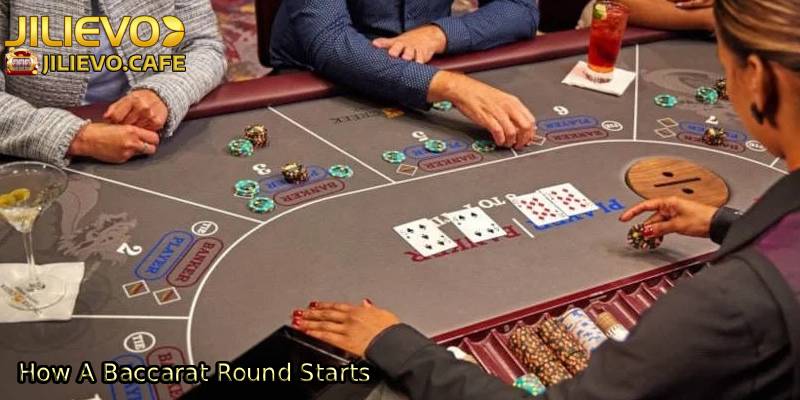
A baccarat round typically follows this sequence:
- Bets are placed: Player, Banker, Tie, and any side bets offered.
- Two cards are dealt to Player: face up in most online formats.
- Two cards are dealt to Banker: face up in most online formats.
- Totals are evaluated: to determine if a natural occurs or if third-card rules apply.
The dealing order is fixed in most baccarat variants. The Player hand is not “the user’s hand” in a personal sense. It is simply one of the two compared hands, and wagers are placed on which will win.
Naturals And When The Round Ends Immediately
A “natural” occurs when the initial two-card total is 8 or 9. If either hand has a natural, the round usually ends immediately without drawing third cards. There are two common cases:
- Player natural or Banker natural: the higher natural wins.
- Both have naturals: if totals are equal, the round is a tie.
Naturals are important because they stop the round early. In practice, baccarat rounds can end after two cards each or continue into third-card resolution depending on these totals.

Player Third-Card Rule
If there is no natural, the Player hand follows a simple rule:
- Player total 0–5: Player draws a third card.
- Player total 6–7: Player stands (draws no third card).
This rule is fixed. It is not a choice. Once it is applied, the Banker third-card rule is evaluated, and that rule can depend on whether Player drew and what the Player third card was.
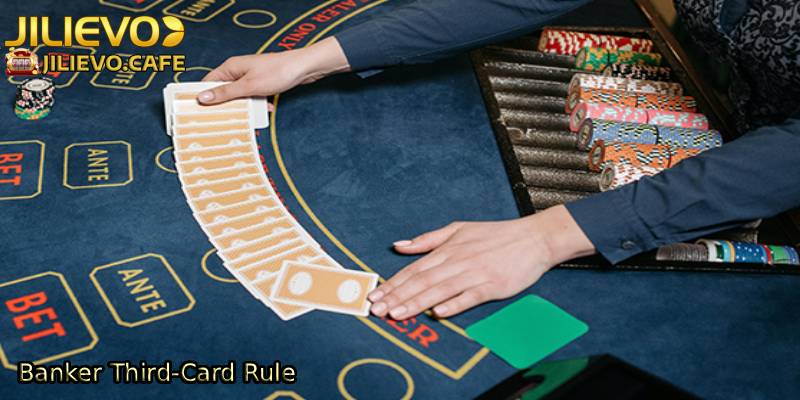
Banker Third-Card Rule
The Banker third-card rules are more detailed. They depend on the Banker’s two-card total and, in many cases, the value of the Player’s third card.
If the Player stands (Player total 6–7), the Banker follows a simplified rule:
- Banker total 0–5: Banker draws a third card.
- Banker total 6–7: Banker stands.
If the Player draws a third card, the Banker’s decision depends on both the Banker total and the Player third card value. A common standard set of rules is summarized below:
| Banker Two-Card Total | Banker Draws If Player Third Card Is | Banker Stands Otherwise |
| 0–2 | Any value | Never stands |
| 3 | 0–9 except 8 | Stands if Player third card is 8 |
| 4 | 2–7 | Stands if Player third card is 0–1 or 8–9 |
| 5 | 4–7 | Stands if Player third card is 0–3 or 8–9 |
| 6 | 6–7 | Stands if Player third card is 0–5 or 8–9 |
| 7 | Never | Always stands |
These rules are applied automatically by the dealer or the game engine. Once any third cards are drawn, final totals are compared and the outcome is settled.
Main Bets, Payouts, And Commission
Baccarat payouts vary slightly by casino rules, but the common settlement model is:
- Player bet: typically pays 1:1 if Player wins.
- Banker bet: typically pays 1:1 minus a commission (commonly 5%) if Banker wins.
- Tie bet: typically pays at a higher ratio, often 8:1 or 9:1, depending on table rules.
Commission on Banker exists because Banker has a small mathematical advantage under standard drawing rules. Some tables instead use a “no commission” model with adjusted payouts or alternative rules for specific outcomes. The posted table rules define which settlement model is used.
If a Tie occurs, Player and Banker bets typically push (stake is returned), while Tie bets pay according to the listed tie payout. This is why tie handling should be understood before playing, especially when side bets are involved.

Scoreboards, Shoe Play, And Round History
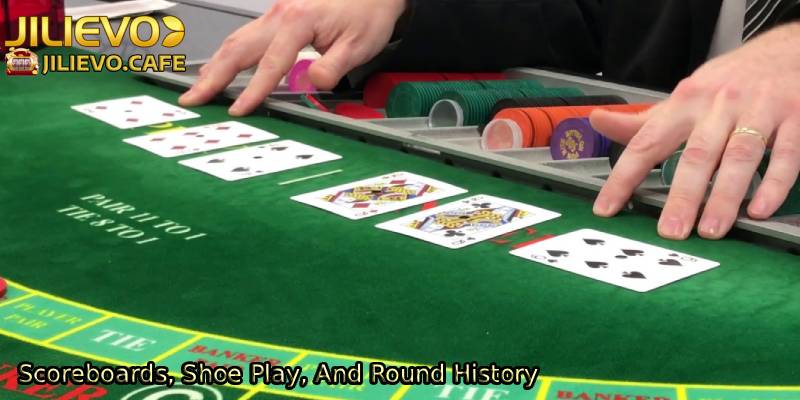
Many baccarat tables display a history grid or scoreboard showing recent outcomes: Banker wins, Player wins, and Ties. These boards help track what has happened in prior rounds of the shoe, but they do not change the rules for future rounds. Baccarat outcomes are determined each round by the dealing and drawing rules applied to the cards that appear.
In shoe-based baccarat, multiple decks are used, and a cut card determines when the shoe ends and a new one begins. Online RNG baccarat often simulates a shoe or generates outcomes independently per round, depending on platform design. Regardless of format, correct interpretation is based on the posted rules and the recorded outcome, not on streak expectations.
Practical Tips For Clear, Responsible Play
Because baccarat is fast and decision-light, practical control is typically based on pacing and stake discipline rather than on complex strategy. Clear play is supported by:
- Confirming table rules: especially Banker commission and Tie payout.
- Understanding third-card rules: to verify outcomes and reduce confusion during settlement.
- Managing session pace: fast rounds can increase exposure quickly.
- Separating side bets from main bets: side bets often have different volatility and return characteristics.
Baccarat is a chance-based game, and short-run sequences can be uneven. Prior results do not guarantee future outcomes, and the most reliable approach is to focus on rule clarity and controlled exposure.
Jilievo For Baccarat Presentation And Transparency
On Jilievo, baccarat is typically presented with clear bet labeling for Player, Banker, and Tie, transparent commission and payout notes, and consistent round history displays that support verification of third-card draws and final settlement outcomes.

CEO Erik Howard is the founder and driving force behind JILIEVO, a trusted and reputable online betting platform. With a clear vision of creating a safe, transparent, and entertaining space for players, he has built JILIEVO into a brand known for innovation, integrity, and customer-first values. Under his leadership, JILIEVO continues to set new standards in the world of sports and casino betting, offering players an exciting yet secure environment to enjoy their favorite games.
Contact information : https://2401.cn.com/
Website: https://2401.cn.com/ceo-erik-howard/
Phone: +880 1712-345678
Email: ceoerikhoward@gmail.com
Address: 45, Road 12, Dhanmondi, Dhaka 1209, Bangladesh
#Jilievo #Jilievocafe #Jilievo_cafe #Jilievo_Bangladesh #Jilievo_online_betting #Jilievo_casino #Jilievo_login #Jilievo_register #live_casino_Bangladesh #sports_betting_Bangladesh #online_casino_Bangladesh #slot_games_Bangladesh #ceo_erik_howard